Starlink
Starlink
THE BIRTH OF A GLOBAL BRAND — future design — STORY SYSTEM
THE BIRTH OF A GLOBAL BRAND — future design — STORY SYSTEM
2023 — 2025
SpaceX isn't a conventional company. They trust in physics. They think and act first principles. They believe that if a product is good, it will find its market. If not, they'll keep innovating. They are an engineer who don’t buy into the notion that what marketing gurus push is the path to success. They don’t plan ahead for more than 3 months. They experiment and learn. And they are allergic to advertising. Our Starlink project was one of those experiments. It lasted 2 years, and moved the brand from 200k customers to 8 million.
SpaceX isn’t a conventional company. They trust in physics. They think and act first principles. They believe that if a product is good, it will find its market. If not, they’ll keep innovating. They are an engineer who don’t buy into the notion that what marketing gurus push is the path to success. They don’t plan ahead for more than 3 months. They experiment and learn. And they are allergic to advertising. Our Starlink project was one of those experiments. It lasted 2 years, and moved the brand from 200k customers to 8 million.
Starlink is a brand that doesn’t behave as a brand. At the time, they didn't have a marketing department. They were starting the journey to make the Internet accessible anywhere. And we were invited to help. They needed to grow acquire customers in 60 countries, at record speed, to a total of over 2M in 1 year with no paid media initiatives. They sought our assistance to design a model to guide their communications. We did that by helping them discover their most authentic public voice.
Starlink is a brand that doesn’t behave as a brand. At the time, they didn’t have a marketing department. They were starting the journey to make the Internet accessible anywhere. And we were invited to help. They needed to grow acquire customers in 60 countries, at record speed, to a total of over 2M in 1 year with no paid media initiatives. They sought our assistance to design a model to guide their communications. We did that by helping them discover their most authentic public voice.
Much of the beauty of what they do is the product quintessence tech, the rockets, thrusters and the satellites. But in between so much SpaceX's greatness, the human element was missing. It was clear that Starlink was enabling a new lifestyle. Thousands of people had started experimenting a life without internet access limitations. And those people were flourishing. So we decided to make the brand story about the story of these people. The very people benefiting from amazing tech.
Much of the beauty of what they do is the product quintessence tech, the rockets, thrusters and the satellites. But in between so much SpaceX’s greatness, the human element was missing. It was clear that Starlink was enabling a new lifestyle. Thousands of people had started experimenting a life without internet access limitations. And those people were flourishing. So we decided to make the brand story about the story of these people. The very people benefiting from amazing tech.
THEIR TECH SPEAKS FOR ITSELF, BUT THERE WAS SOMETHING MISSING.

Everything came together as “Internet from space for humans on Earth”. Real, interesting people on Earth, pushing the boundaries of what is possible, using the technology to enlarge their lives and communities.
Everything came together as “Internet from space for humans on Earth”. Real, interesting people on Earth, pushing the boundaries of what is possible, using the technology to enlarge their lives and communities.
An that core idea came to life as a story system. A nimble curatorship and production module that allowed us to identifying real Starlink customers that felt extraordinarily compeling, and capturing their stories on how they where using Starlink.
An that core idea came to life as a story system. A nimble curatorship and production module that allowed us to identifying real Starlink customers that felt extraordinarily compeling, and capturing their stories on how they where using Starlink.


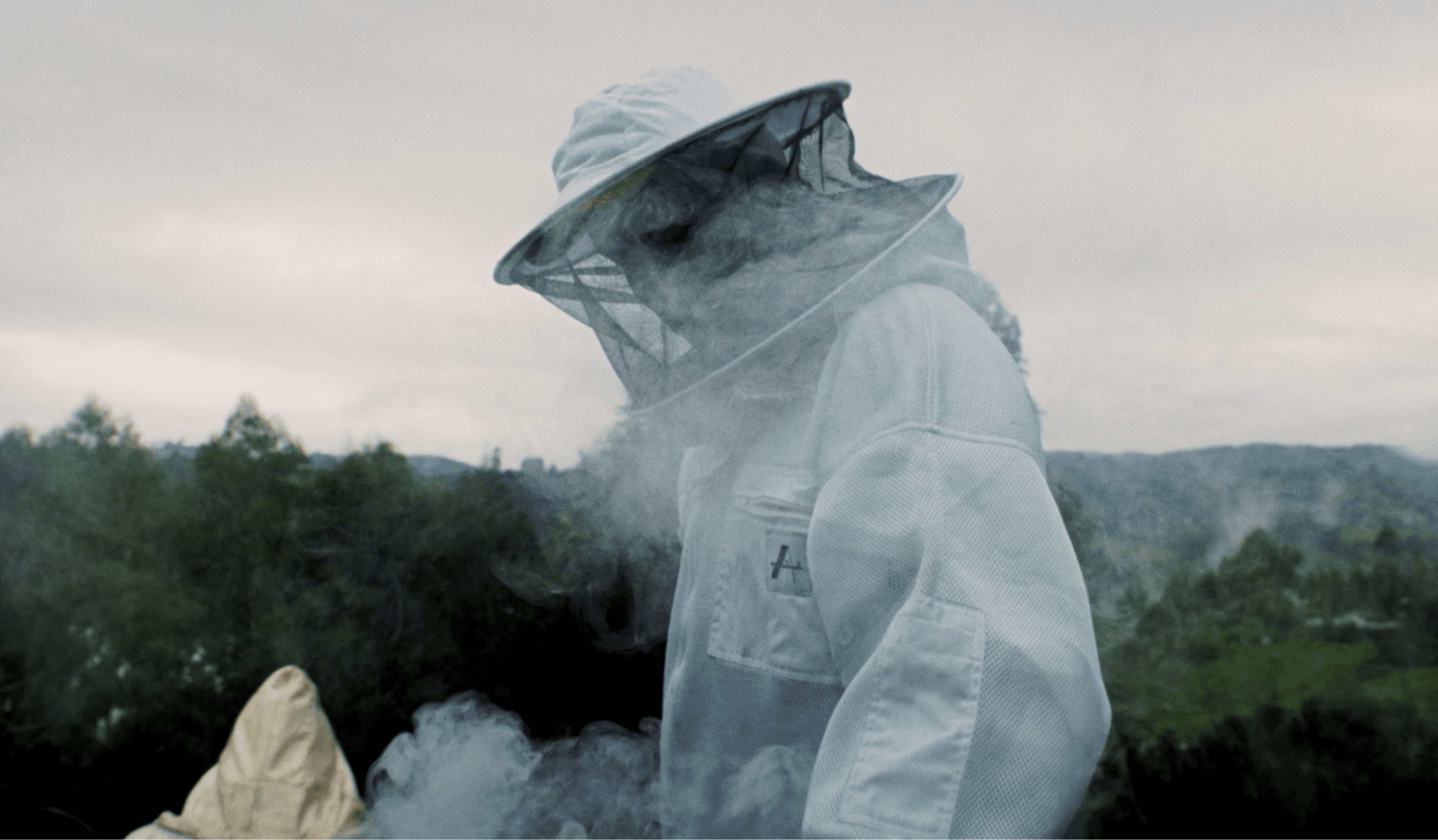


INTERNET FROM SPACE FOR HUMANS ON EARTH.
All of what you could see above is consumer-facing work. But future design rarely ends at what people can see. Some of the most meaningful creative work happens underneath the surface, building the systems that allow a company to keep telling better stories long after any campaign is over. One example was what we called the Story of Us. Every company has one, whether it’s written down or not. The Story of Us is the narrative that connects why a company exists, how it behaves, and what it creates. It translates the founder’s vision into something everyone, from engineers to customer support, can recognize as the same journey.
All of what you could see above is consumer-facing work. But future design rarely ends at what people can see. Some of the most meaningful creative work happens underneath the surface, building the systems that allow a company to keep telling better stories long after any campaign is over. One example was what we called the Story of Us. Every company has one, whether it’s written down or not. The Story of Us is the narrative that connects why a company exists, how it behaves, and what it creates. It translates the founder’s vision into something everyone, from engineers to customer support, can recognize as the same journey.
We also designed Starlink’s Annual Progress Report. The document the company used to share its progress with the world. Unlike the films and photography, this work wasn’t about visual craft. It was about weaving together technology, launches, milestones, customer stories, and global impact into one coherent narrative that could speak to very different audiences. I enjoy that kind of work just as much. Sometimes storytelling isn’t about making something beautiful. It’s about making a fast-moving company easy enough for their key stakeholder understand the direction and pace they are moving.
We also designed Starlink’s Annual Progress Report. The document the company used to share its progress with the world. Unlike the films and photography, this work wasn’t about visual craft. It was about weaving together technology, launches, milestones, customer stories, and global impact into one coherent narrative that could speak to very different audiences. I enjoy that kind of work just as much. Sometimes storytelling isn’t about making something beautiful. It’s about making a fast-moving company easy enough for their key stakeholder understand the direction and pace they are moving.
Another example was surprisingly simple. Starlink was growing across dozens of countries with highly decentralized teams. Great stories only matter if people can actually use them. So we built a global story library inside Figma—a living collection of narratives, photography, films, messaging, and assets that anyone in the company could access, adapt, and publish. Sometimes designing the future isn’t creating more content. It’s making great stories easy to find, easy to reuse, and impossible to lose.
Another example was surprisingly simple. Starlink was growing across dozens of countries with highly decentralized teams. Great stories only matter if people can actually use them. So we built a global story library inside Figma—a living collection of narratives, photography, films, messaging, and assets that anyone in the company could access, adapt, and publish. Sometimes designing the future isn’t creating more content. It’s making great stories easy to find, easy to reuse, and impossible to lose.